
How PTO Speed and Ground Speed Decide What a Finish Mower Leaves Behind
Across Canada, many properties sit between a suburban lot and a small farm, with an acre or two of lawn, a paddock edge and a ravine bank to keep tidy. That mix of ground is where a tractor-mounted mower earns its place.
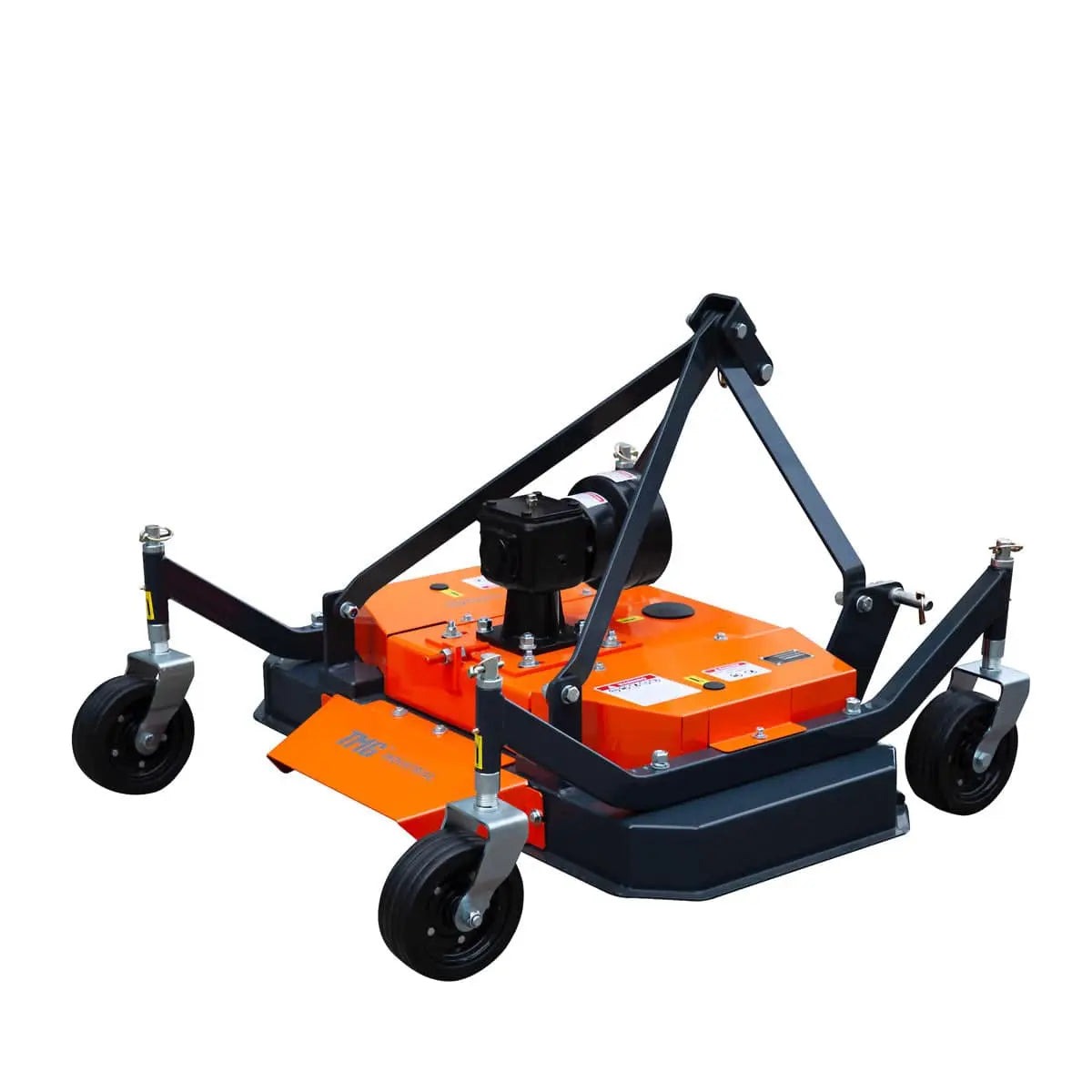
A 3-point hitch finish mower is built for the cut, not the clearing. It trims grass to a clean, even height behind a tractor, and the quality of that cut depends on two speeds working together: how fast the blades spin and how fast the tractor moves through the grass.
What Sets This Tool Apart from a Brush Cutter
A finish mower sits between a lawn mower and a rotary cutter. Its blades are thin and sharp and spin close to the ground to leave a lawn-like surface, while a rotary cutter, often called a brush hog, is built to chew through tall grass and light brush.
Using the wrong one costs either the finish or the machine. A mower pushed into thick brush bends blades and strains the gearbox, while a rotary cutter on a manicured lawn leaves a ragged surface. Matching the tool to the vegetation is the first decision.
Why PTO Speed Sets the Cut
The mower is driven from the tractor through a power takeoff shaft, and the blades are designed for a specific PTO speed, usually a standard figure stamped on the machine. Run the engine too slowly and the blades lose tip speed, which tears grass rather than cutting it.
Blade tip speed is what slices a stem cleanly. A blade turning at the right speed leaves a crisp edge, while one running slow leaves the frayed tips that turn grey and brown a day later. Holding the engine at its rated PTO speed is the habit that matters most.
Tractor engine load matters too. A mower that demands more power than the PTO delivers will pull the engine speed down in thick grass, and the cut gets worse exactly when the grass is heaviest, so a tractor with comfortable reserve is better than one run at its limit.
Ground Speed, Overlap and Pattern
Driving slower produces a better cut. At a walking pace the blades have time to lift and cut every stem, while at a fast pace grass is only partly cut or pushed down and left standing after the mower has gone by.
Overlapping each pass by a few inches avoids stripes of uncut grass, and following a consistent pattern keeps clippings spread evenly. Mowing across a slope rather than up and down is safer, and wet grass should wait for a drier day because it clumps and clogs the deck.
A property owner on the edge of the city who mowed damp paddock grass at full speed ended up with clumped windrows and a deck packed with wet clippings, then spent longer cleaning it than the cut had taken. Slowing down and waiting a day would have saved the job.
Setting Up the Three-Point Hitch Correctly
A mower should run level from front to back and from side to side. The top link adjusts the fore and aft angle, and the lift arms adjust the side tilt, so a few minutes with a tape measure on flat ground sets a cut that does not scalp one edge.
Sway chains stop the mower swinging on turns, and the driveline needs the correct length so it does not bottom out or pull apart when the mower lifts. Setting these once, carefully, saves repeated adjustments and protects the gearbox from shock loads.
Cutting Height, Seasons and Uneven Ground
Cutting height should follow the season. A higher deck setting in dry summer weather shades the roots and holds moisture, while a lower one suits the faster growth of wet spring grass, provided no more than a third of the blade length is removed in a single pass.
Uneven ground is hard on a rigid mower deck. Bumps and swales around ravine edges and old drainage lines make a rigid deck scalp the high spots, so slowing down and raising the deck there protects both the turf and the blades.
Types, Widths and Accessories
Mowers come as rear-mounted three-point units and as tow-behind versions on their own wheels, and both have their uses. Rear mounts follow the tractor closely and are easier to reverse, while a tow behind mower carries its own weight and suits larger open areas.
At 48 inches wide, a mower of this size matches a compact tractor and cuts a useful swath on mid-sized lawns. Adjustable gauge wheels or a rear roller, where fitted, keep the height steady and stop the edge digging into soft ground, so they are worth checking before the first cut.
Staying Safe Around a Spinning Driveline
A few rules matter most when the shaft is turning.
Keep every shield and guard in place
Stop the PTO before leaving the seat
Keep bystanders and pets well away from the mower
Check the area for stones and debris first
The exposed driveline is the real hazard. Loose clothing and long hair catch on a spinning shaft in a fraction of a second, and the shield is the only protection, so a missing guard means the machine should not run.
Thrown objects are the second hazard. A stone or piece of wire hit by a blade leaves the deck at high speed, which is why walking the area first and keeping people away from the discharge side matters as much as any rating.
Keeping It Sharp and Serviceable
Blades dull with use and cut worse long before they look worn. Sharpening them evenly, so the blades stay balanced, keeps vibration down, and checking gearbox oil and grease points on a schedule matters even for a PTO mower used only a few hours each season.
The trade-offs are clear. A finish mower gives a cleaner result than a rotary cutter and works at a gentle pace, but it is limited to grass, cannot handle brush or deep ruts, and needs a tractor with a PTO to run at all.
Where Tractor Mowing Is Heading
Lower-profile decks, better guarding and clearer height scales are becoming standard even on small mowers, and some owners now pair them with robotic mowers for the lawn proper, keeping the tractor for the larger and rougher areas around it.
The practical test is whether the tractor can hold its rated PTO speed at a slow ground speed in the grass the property actually grows. TMG Equipment shows the working width, driveline type and hitch category for this finish mower, so the match can be worked out on paper and then confirmed in person.